Overview
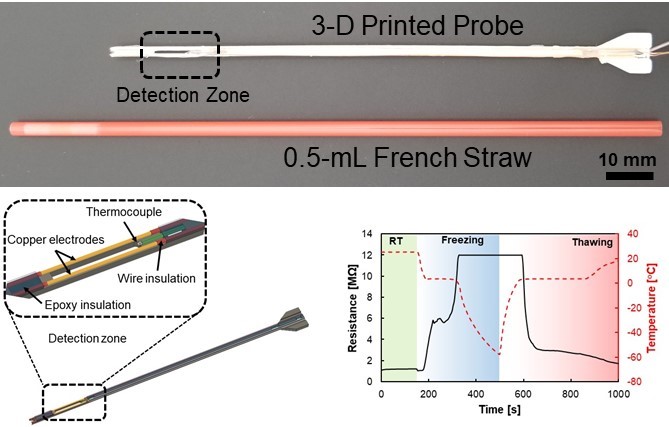
3-D printing offers unexplored utility as a fabrication method to design, prototype, test, and implement sensing platforms for monitoring of cryopreservation procedures and phenomena. Such devices can provide quantitative data regarding temperature profiles and phase-transition events and can be used to minimize the variations in implementing standardized cryopreservation protocols. Given that 3-D printing is increasingly common around the world, and specific devices can be designed based on user needs, customization leading to eventual standardization could be an expected outcome of applying this technology. By sharing design files, different user groups can become micromanufacturers and perform reproducible cryopreservation procedures regardless of their location.