Overview
Zebrafish (Danio rerio) is a prominent model organism for studying vertebrate biology in biomedical research. Reproductive biologists have focused on identification of model strains and cryopreservation of their genetic resources for the development of genetic repositories. Accurate estimation of sperm quality is necessary for standardization of cryopreservation. However, current assessment of sperm quality is characterized by inconsistent and conflicting results, which is a considerable barrier to standardization. Thus, reproductive biologists aim to define observable characteristics that correlate to sperm quality, and this requires a better understanding of the fundamental mechanisms that dictate sperm swimming. This project aimed to design, fabricate, and optimize a microfluidic device (Fig. 1) that allowed for activation, imaging, and analysis of zebrafish sperm directional swimming at controlled fluid velocities between 20 and 60 μm/s ± 25% driven by hydrostatic pressure. To achieve this, a microfluidic device was designed to activate sperm in a flowstream with bulk fluid velocity induced by height differentials between inlet and outlet reservoirs.
Rheotaxis, swimming into oncoming current, has been observed in mammalian sperm, but not in zebrafish sperm, prompting the scientific premise that robust sperm can be identified by this behavior, and it can be used as a predictor of quality. We altered the design of the MAMC to permit the control of fluid velocities in the microchannel to match those of zebrafish sperm (20-60 µm /sec) to enable study of swimming behavior. Inlet and outlet tubes of defined media heights act as a manometer to control flow . Preliminary observations indicate that sperm can exhibit directional swimming. Without a mixer, this occurs at the boundaries of the sperm and adjacent water streams. When overlaid on a COMSOL-simulated map of salt concentration in the flow channel, paths of activated sperm show upstream swimming. This is an example of new modalities of biological parameters that the MAMC can bring to sperm research to improve evaluation of quality.
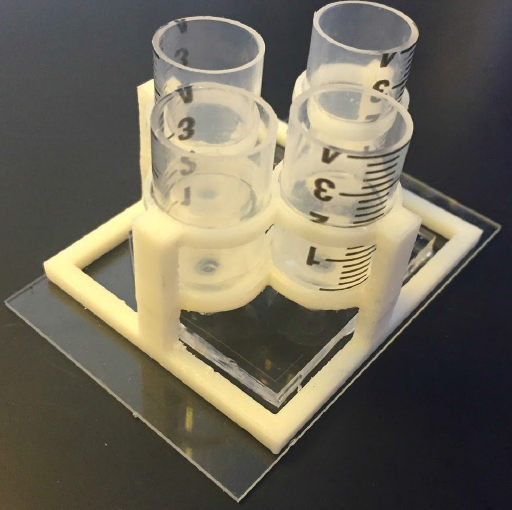
Fig. 1. A microfluidic device to manipulate flow and observe sperm rheotactic swimming behavior of zebrafish.