Overview
Oyster hatcheries are facilities that focus on producing oysters that farmers can grow on their offshore leases. Hatcheries start by spawning broodstock (adult) oysters to create oyster larvae. These larvae remain in a free-swimming, planktonic stage of development for about 2 weeks. At 2 weeks of age, oyster larvae permanently attach (called settling) to a hard substrate, usually a shell or rock, provided by the hatchery. When oyster larvae settle, they are called spat. Hatcheries, which usually contain nurseries as well, raise the spat for several months until they are 8 to 10 mm in size. At this point, spat are called seed and are large enough to be sold to a farmer and "planted" at a farm site off the coast.
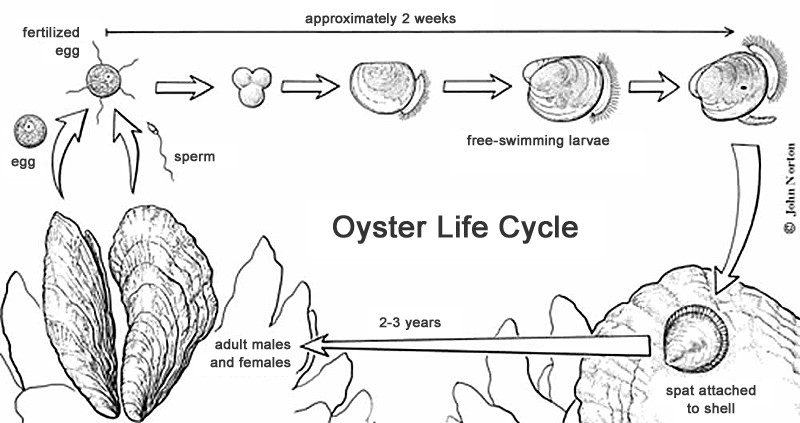
The life cycle of an oyster. Starting from sperm and eggs and developing into fertilized eggs, then free- swimming larvae, then spat attached to shell, and finally into adults. https://www.pangeashellfish.com/blog/oyster-life-cycle-on-farm
The process of spawning oysters and raising the larvae into seed takes months and is often unpredictable. The AGGRC is dedicated to conducting research that improves oyster hatchery operations. The AGGRC has pioneered techniques to effectively and consistently cryopreserve oyster sperm. Cryopreservation (or freezing) of oyster sperm can indefinitely preserve genetic material. When needed, the genetic material can then be easily distributed to oyster hatcheries for spawning, decreasing the need to keep large quantities of broodstock on hand and allowing those resources to be redirected elsewhere (Paniagua-Chavez & Tiersch 2001). Additionally, the genetic material of many different oyster lines can be stored and accessible to hatcheries. A hatchery can then create breeding programs with these oyster lines that enhance the fitness of their future oyster stock. The AGGRC has also developed nonlethal methods of collecting sperm for cryopreservation, so that valuable individuals do not need to be sacrificed (Yang et al. 2013). In future work, the AGGRC plans to expand their commercial scale genetic repository operations. This work will streamline the process and grant hatchery owners increased access valuable genetic material.
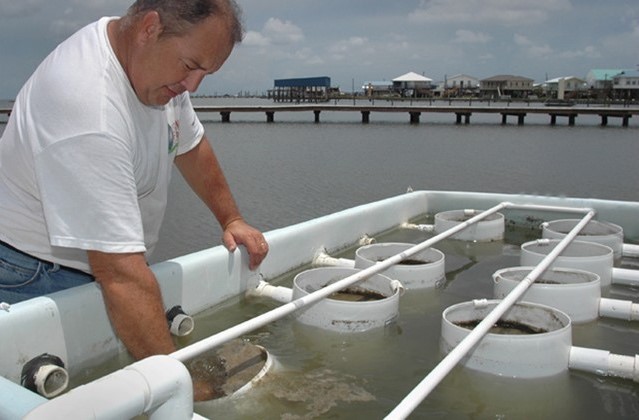
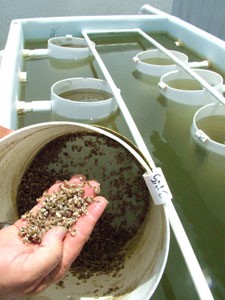
Dr. John Supan, former director of Louisiana’s Sea Grant Oyster Research Laboratory and oyster specialist for the LSU Agricultural Center, handles oyster spat in a tank at the lab. Photo: LSU Sea Grant. https://gulfseafoodnews.com/2015/05/23/new-gulf-oyster-hatchery-opens-bayou-state/